Huzaifa bin Yaman reported,
The Messenger of Allah ﷺ said, "The angels received the soul of a man from the nations before you and asked him, 'Have you done any good deed?'He replied, 'No.'They said, 'Try to remember.'He said, 'I used to lend money to people, and I would instruct my servants to give more time to those in difficulty and to overlook the debts of those who were well-off.'"The Prophet ﷺ continued, "Allah 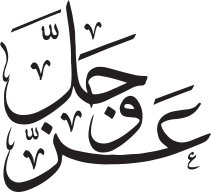 said, 'Overlook his sins.'"
Azami 5627
Sahihعن حذيفة بن اليمان قال
قال رسول الله ﷺ: تلقت الملائكة روح رجل ممن كان قبلكم، فقالوا: أعملت من الخير شيئا؟ قال: لا. قالوا: تذكر. قال: كنت أداين الناس، فآمر فتياني أن ينظروا المعسر، ويتجوزوا عن الموسر، قال: قال الله عز وجل: تجوزوا عنه.
Bukhari narrated it in the Book of Business Transactions (2077), and Muslim in the Book of Sharecropping (1560), both from the hadith of Zuhayr, who said, Mansur narrated to us, from Rabi bin Harash, that Huzaifa narrated it to them, and he mentioned it. The wording given is Muslim's.Bukhari said, Abu Malik (that is, Saad bin Tariq) said, from Rabi, "I used to be easy with the one who could afford to pay, and give respite to the one in hardship." Shuba followed him in narrating from Abdul-Malik, from Rabi. Abu Awana said, from Abdul-Malik, from Rabi, "I give respite to the one who can afford to pay, and overlook the debt of the one in hardship." Naeem bin Abu Hind said, from Rabi, "So I would accept from the one who could afford to pay, and overlook the debt of the one in hardship." End of quote.Muslim connected most of these narrations with full chains. Then there is Muslim's statement in the narration of Huzaifa (29), "Uqba bin Amir Juhani and Abu Masud Ansari said, this is how we heard it from the mouth of the Messenger of Allah ﷺ." This is a mistake. The correct version is that Uqba bin Amr, Abu Masud Ansari, said this alone, while Uqba bin Amir Juhani has no hadith here at all.Muslim also transmitted the hadith of Naeem bin Abu Hind and the hadith of Abdul-Malik bin Umayr, both from Rabi bin Harash, from Huzaifa, and they related the hadith. He said at the end of it, "Abu Masud said, this is how I heard the Messenger of Allah ﷺ say it," meaning that Abu Masud, whose name was Uqba bin Amr, had himself witnessed what Huzaifa reported. This got distorted for some narrators, so it became "Uqba bin Amir and Abu Masud." Daraqutni said, it was Abu Khalid Ahmar who made this mistake and said it this way, while the correct version is that it was Uqba bin Amr, Abu Masud Ansari, alone.As for his saying "yatajawazu," it comes from tajawuz, meaning leniency in demanding and collecting payment, and accepting something with a slight deficiency in it.