Qays bin Bishr Taghlibi reported,
My father, who was a companion of Abu Darda, told me that there was a man in Damascus from among the Companions of the Prophet ﷺ called Ibn Hanzaliyya. He was a solitary man who rarely sat with people. He was always in prayer, and when he finished, he would occupy himself with glorifying and magnifying Allah until he returned to his family.One day he passed by us while we were sitting with Abu Darda, and Abu Darda said to him, "A word that may benefit us and will not harm you."He said, "The Messenger of Allah ﷺ dispatched a military expedition. When it returned, one of the men came and sat in the gathering where the Messenger of Allah ﷺ was, and he said to a man beside him, 'If only you had seen us when we met the enemy. So-and-so charged forward and stabbed his opponent, saying, "Take that, I am the Ghifari lad!" What do you think of his words?'The other replied, 'I think he has nullified his reward.'Another man heard this and said, 'I see no harm in it.'They began to dispute until the Prophet ﷺ heard them, and he said, 'Glory be to Allah. There is no harm in his being praised and rewarded as well.'"I saw that Abu Darda was delighted by this. He kept lifting his head toward Ibn Hanzaliyya and saying, "You yourself heard this from the Messenger of Allah ﷺ?"He kept replying, "Yes."Abu Darda kept asking him to repeat it until I thought he was about to fall on his knees before him.Then on another day Ibn Hanzaliyya passed by us, and Abu Darda said to him, "A word that may benefit us and will not harm you."He said, "The Messenger of Allah ﷺ said to us, 'The one who spends on horses in the cause of Allah is like a man stretching out his hand in charity without ever drawing it back.'"Then on another day he passed by us, and Abu Darda said to him, "A word that may benefit us and will not harm you."He said, "The Messenger of Allah ﷺ said, 'What an excellent man Khuraym al-Asadi is, were it not for the length of his hair and his lowering his garment below the ankles.' This reached Khuraym, so he took a knife and cut his hair to the middle of his ears, and raised his garment to the middle of his shins."My father told me, "After that I went in to Muawiya, and there was an old man with him whose hair was above his ears and whose cloak reached the middle of his shins. I asked about him, and they said, 'This is Khuraym al-Asadi.'"Then on another day he passed by us while we were with Abu Darda, and Abu Darda said to him, "A word that may benefit us and will not harm you."He said, "I heard the Messenger of Allah ﷺ say, 'You are about to come upon your brothers, so put your mounts in good order and your clothing in good order, so that you may be like a beauty mark among the people. For Allah 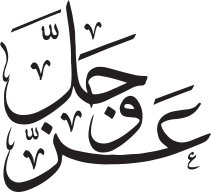 does not love coarseness, neither in speech nor in conduct.'"
Azami 15454
Hasanعن قيس بن بشر التغلبي قال
أخبرني أبي-وكان جليسا لأبي الدرداء- قال: كان بدمشق رجل من أصحاب النبي ﷺ يقال له: ابن الحنظلية، وكان رجلا متوحدا، قلما يجالس الناس، إنما هو في صلاة فإذا فرغ فإنما يسبح ويكبر حتى يأتي أهله، فمر بنا يوما ونحن عند أبي الدرداء، فقال له أبو الدرداء: كلمة تنفعنا ولا تضرك. قال: بعث رسول الله ﷺ سرية فقدمت، فجاء رجل منهم، فجلس في المجلس الذي فيه رسول الله ﷺ، فقال لرجل إلى جنبه: لو رأيتنا حين التقينا نحن والعدو، فحمل فلان فطعن، فقال: خذها وأنا الغلام الغفاري. كيف ترى في قوله؟ قال: ما أراه إلا قد أبطل أجره. فسمع ذلك آخر، فقال: ما أرى بذلك بأسا. فتنازعا حتى سمع النبي ﷺ فقال: سبحان الله لا بأس أن يحمد ويؤجر. قال: فرأيت أبا الدرداء سر بذلك، وجعل يرفع رأسه إليه، ويقول: أنت سمعت ذلك من رسول الله ﷺ فيقول: نعم. فما زال يعيد عليه حتى إني لأقول: ليبركن على ركبتيه. قال: ثم مر بنا يوما آخر، فقال له أبو الدرداء: كلمة تنفعنا ولا تضرك قال: قال لنا رسول الله ﷺ: إن المنفق على الخيل في سبيل الله كباسط يديه بالصدقة لا يقبضها. قال ثم مر بنا يوما، آخر فقال له أبو الدرداء: كلمة تنفعنا ولا تضرك. فقال: قال رسول الله ﷺ: نعم الرجل خريم الأسدي لولا طول جمته وإسبال إزاره، فبلغ ذلك خريما، فجعل يأخذ شفرة يقطع بها شعره إلى أنصاف أذنيه، ورفع إزاره إلى أنصاف ساقيه. قال: فأخيرني أبي قال: دخلت بعد ذلك على معاوية، فإذا عنده شيخ جمته فوق أذنيه، ورداؤه إلى ساقيه، فسألت عنه، فقالوا: هذا خريم الأسدي. قال: ثم مر بنا يوما آخر، ونحن عند أبي الدرداء، فقال له أبو الدرداء: كلمة تنفعنا ولا تضرك، فقال سمعت رسول الله ﷺ يقول: إنكم قادمون على إخوانكم، فأصلحوا رحالكم، وأصلحوا لباسكم، فإن الله عز وجل لا يحب الفحش، ولا التفحش.
Abu Dawud (4089), Ahmad (17622), Hakim (4/183), and Bayhaqi in Shuab (5793) all narrated it from the hadith of Hisham bin Saad, who said, "Qays bin Bishr Taghlabi told us, he said, 'My father told me' - and he was a companion who used to sit with Abu Darda - he said," and then he related it.Hakim said, "Its chain is sahih." Its chain is hasan because of Bishr Taghlabi, the father of Qays, who is Bishr bin Qays Taghlabi. He is "trustworthy" (saduq) as Hafiz said, and no criticism of him appeared in his biography in his Tahzib.It is also hasan because of his son Qays, who is one of the men of Sahih, about whom Abu Hatim said, "I see no problem with his hadith."As for what Ahmad (18899) narrated from Abdul-Razzaq, "Mamar told us, from Abu Ishaq, from Shamir, from Khuraym, a man from Banu Assad, who said, the Messenger of Allah ﷺ said, 'Were it not for two things in you, you would be you.'" He said, "One of them would be enough for me." He said, "You let your garment trail, and you grow your hair long." He said, "No doubt about it, by Allah, I will not do it." This is daif.Shamir is Ibn Atiya Asadi, who did not meet Khuraym, as stated in Tahzib Kamal, and it has other paths, none of which is free of defect.