Uqba bin Amir reported,
The Prophet ﷺ said about a man called Dhul Bijadayn, "He is awwah," meaning, he was a man who frequently remembered Allah 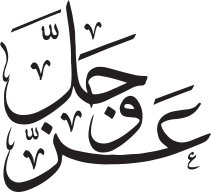 through reciting the Quran and would raise his voice in supplication.
Azami 10273
Hasanعن عقبة بن عامر
أن النبي ﷺ قال لرجل يقال له: ذو البجادين: إنه أواه وذلك أنه كان رجلا كثير الذكر الله عز وجل في القرآن، ويرفع صوته في الدعاء.
Narrated by Ahmad (17453) and Tabarani in al-Kabir (17/295), both through the route of Abdullah bin Lahia, from Harith bin Yazid, from Ali bin Rabah, from Uqba bin Amir, who related it. Ibn Lahia has well-known criticism directed at him, but the meaning of the hadith has been corroborated.This corroboration comes from what was reported from Ibn Adraa, who said, "I was guarding the Prophet ﷺ one night when he went out for some need of his. He saw me, took my hand, and we set off. We passed by a man who was praying and reciting the Quran aloud. The Prophet ﷺ said, 'Perhaps he is showing off.' I said, 'O Messenger of Allah, he is praying and reciting the Quran aloud.' He let go of my hand and said, 'You will never attain this matter through such striving to outdo one another.'"He said, "Then he went out another night while I was guarding him for some need of his. He took my hand and we passed by a man praying with the Quran. I said, 'Perhaps he is showing off.' The Prophet ﷺ said, 'No, indeed he is one who turns often to Allah.' I looked, and it was Abdullah Dhul-Bijadayn."Narrated by Ahmad (18971), Ibn Manda in Marifat al-Sahaba (2/686–687), and Bayhaqi in al-Shuab (576), all through routes from Hisham bin Saad, from Zayd bin Aslam, from Ibn Adraa, who related it. Hisham bin Saad is disputed, but his hadith is deemed hasan when corroborated, or when he narrates from Zayd bin Aslam, since he was described as one of the most reliable narrators in relation to him. However, Zayd bin Aslam did not hear directly from Ibn Adraa, and he frequently narrates with elision. Bayhaqi criticized the hadith on this basis, saying, "The chain of this hadith is mursal."He also said that Ibn Adraa was given this name because when he embraced Islam, he took off his clothes, and his mother gave him a coarse woolen garment (bijad). He split it into two pieces, wrapping one around his waist and draping the other over his shoulders. Ibn Adraa's name was Salama bin Zakwan.