Ayesha reported,
A Jewish man from Banu Zurayq named Labid bin al-Asam cast a spell on the Messenger of Allah ﷺ, to the point that the Messenger of Allah ﷺ would imagine he had done something when he had not.Ayesha said, until one day, or one night, the Messenger of Allah ﷺ supplicated, then supplicated again, then said, "Ayesha, do you realize that Allah 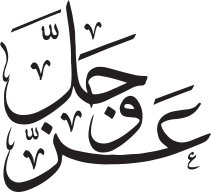 has answered me concerning the matter I asked Him about? Two men came to me. One sat at my head and the other at my feet. The one at my head said to the one at my feet, or the one at my feet said to the one at my head, 'What ails this man?'The other replied, 'He has been bewitched.'He asked, 'Who bewitched him?'He answered, 'Labid bin al-Asam.'He asked, 'With what?'He said, 'With a comb, the hair caught in it, and the dried sheath of a male date palm.'He asked, 'Where is it?'He said, 'In the well of Arwan.'"Ayesha said, the Messenger of Allah ﷺ then went to the well with some of his companions, and when he came back he said, "Ayesha, its water looked like an infusion of henna, and its palm trees were like the heads of devils."I said, "Messenger of Allah, why did you not burn it?"He said, "No. As for me, Allah has cured me, and I disliked stirring up evil among the people because of it."She said, he then ordered that it be buried, and it was buried.
Ahmad 24300
Sahihحدثنا ابن نمير حدثنا هشام عن أبيه
عن عائشة قالت
سحر رسول الله ﷺ يهودي من يهود بني زريق يقال له لبيد بن الأعصم حتى كان رسول الله ﷺ يخيل إليه أن يفعل الشيء وما يفعله قالت حتى إذا كان ذات يوم أو ذات ليلة دعا رسول الله ﷺ ثم دعا ثم قال يا عائشة شعرت أن الله عز وجل قد أفتاني فيما استفتيته فيه جاءني رجلان فجلس أحدهما عند رأسي والآخر عند رجلي فقال الذي عند رأسي للذي عند رجلي أو الذي عند رجلي للذي عند رأسي ما وجع الرجل قال مطبوب قال من طبه قال لبيد بن الأعصم قال في أي شيء قال في مشط ومشاطة وجف طلعة ذكر قال وأين هو قال في بئر أروان قالت فأتاها رسول الله ﷺ في ناس من أصحابه ثم جاء فقال يا عائشة كأن ماءها نقاعة الحناء ولكأن نخلها رءوس الشياطين قلت يا رسول الله فهلا أحرقته قال لا أما أنا فقد عافاني الله عز وجل وكرهت أن أثير على الناس منه شرا قالت فأمر بها فدفنت
Its isnad is sahih. Bukhari related it, 6/276, no. 3175, in Fath al-Bari, in the chapter on jizya. Muslim related it, 4/719, no. 2189, in the chapter on greetings. Nasai related it in Sunan al-Kubra, 4/380, no. 7615. Ibn Majah related it, 2/1173, no. 3445, in the chapter on medicine.